
Your Essential Guide to a Happy, Healthy, and Pet-Friendly Diwali

Diwali, the Festival of Lights, is a time for joy, family, delicious food, and beautiful celebrations. While the fireworks add an electrifying spectacle to the night sky, safety—for humans and animals alike—should always be the priority.
To ensure your celebration remains happy and free from harm, here is your essential guide to Diwali safety tips, covering everything from protective clothing and fire prevention to air, noise, and pet protection precautions.
Fire Safety: Dressing for the Occasion and Handling Sparks
The clothes you wear and the setup around you are the first lines of defense against fire hazards.
- Wear Cotton Clothes Only: Avoid synthetic materials (like nylon, polyester, or silk). Synthetic fabrics can easily catch fire and melt onto the skin, causing severe burns. Cotton clothing is safer as it is less prone to catching fire and is easier to extinguish.
- Stay Hydrated and Covered: Keep a bucketful of water handy and a few wet towels nearby. In case of a small fire or minor burn, water is the quickest way to react.
- Protect Your Feet: Wear slippers or closed-toe shoes. Never handle fireworks barefoot. This simple step can protect your feet from errant sparks, hot residue, or unexploded crackers on the ground.
- Use Safety Glasses: While lighting large fireworks, consider wearing safety glasses to protect your eyes from sparks, debris, and smoke.
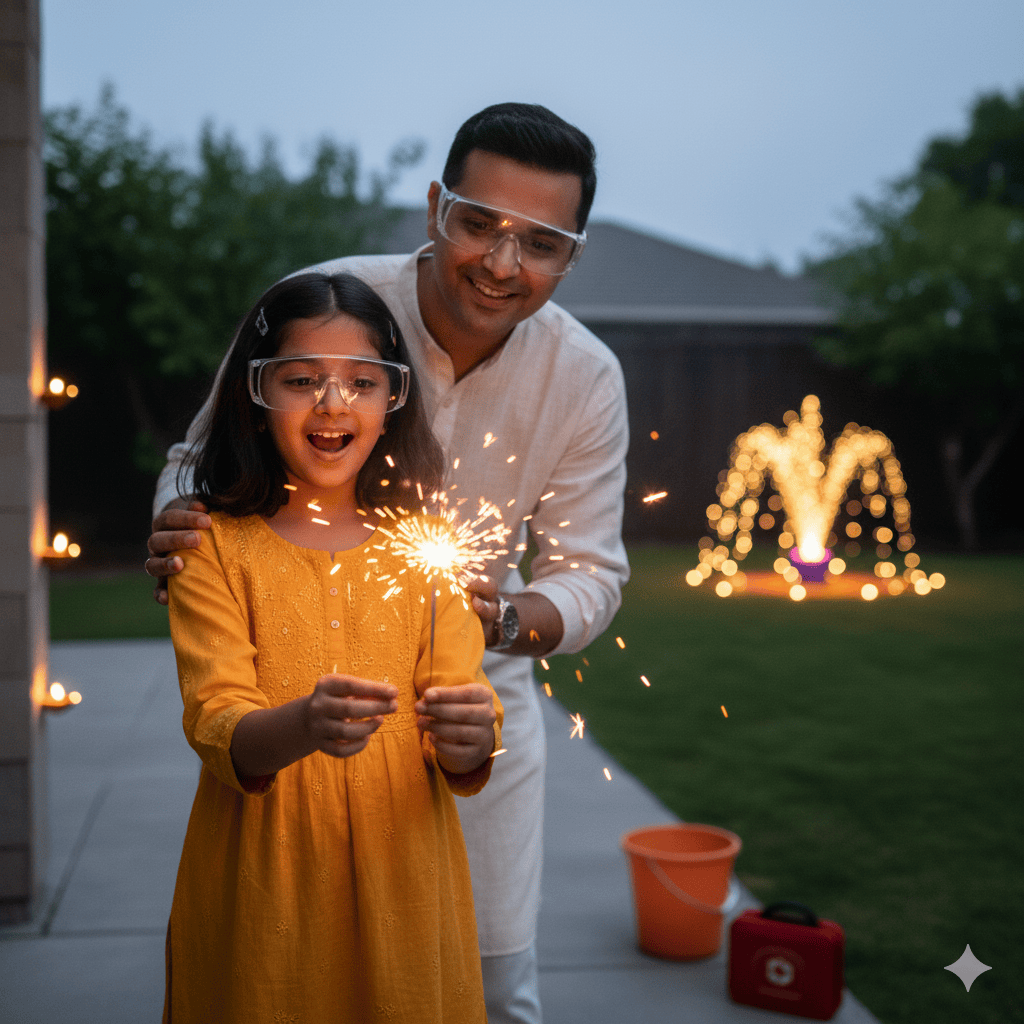
Cracker Safety: How and Where to Light Fireworks
The way you handle fireworks is crucial. Following these steps will significantly reduce the risk of injury:

- Choose Low-Sound Crackers for Animal Safety: Opt for sparklers, anars (flower pots), and charkhas (ground spinners) instead of noisy bombs and rockets. The loud, unpredictable noises of high-decibel crackers terrify pets and street animals, causing stress, panic, and even injury. Celebrate compassionately by minimizing noise pollution.
- Burst Crackers Only in Open Areas: Always choose a safe, open space away from homes, dry grass, inflammable materials, or vehicles. Clear the area of any loose debris before you begin.
- Maintain a Safe Distance: Keep your face away while bursting crackers. Light the firework and step back immediately. Never lean over a cracker.
- Avoid Throwing or Lighting Crackers by Hand: Use a long incense stick or a dedicated fuse-lighter. Never hold a lit firecracker in your hand after the fuse is ignited, and never throw a lit cracker toward people.
- Do Not Attempt to Re-light a Misfire: If a firework doesn’t go off, do not go back to it immediately. Wait a safe amount of time, then douse it with water before disposal.
Health and Emergency Preparedness
Being prepared ensures you can react quickly and effectively to any accident or health concern.

- Protect Against Pollution (Masks and Ear Plugs): If you are in an area with high pollution from crackers, use N95 or equivalent masks to filter particulate matter and protect your lungs. If noise levels are high, use cotton plugs for your ears or noise-cancelling ear protection, especially for children and the elderly, to safeguard against hearing damage.
- Keep a First Aid Kit Handy: Before you start the festivities, ensure you have a well-stocked first aid kit readily accessible. It should contain antiseptic wipes, burn cream, gauze, and bandages.
- If Burned, React Immediately: If clothing catches fire, the first step is to remove the burning clothes. Then, quickly layer the body with wet clothes or towels to cool the burn area. Seek professional medical help for anything more than a minor surface burn.
- Protect Vulnerable Individuals: People with lung diseases (like asthma or chronic bronchitis) should be away from crackers and smoke. The high levels of air pollution and particulate matter from fireworks can trigger severe respiratory distress. It is safer for them to remain indoors with windows closed.
- Properly Dispose of Cracker Waste: After the festivities, ensure all used and unexploded crackers and sparklers are collected and immediately soaked in a bucket of water before final disposal. This prevents re-ignition and accidental burns from half-burnt debris.
Key Takeaway for a Safe Diwali:
Diwali is a time to create happy memories, not painful ones. By following these simple but crucial Diwali safety guidelines, you can ensure that the festival is truly one of light, prosperity, and health for everyone—including our furry friends!
What’s your favorite non-firework tradition for celebrating Diwali safely? Share in the comments below!
Leave a Reply